
Six College Grant Recipients
Six Researchers from the College of Pharmacy and Nutrition Receive Funding from the Saskatchewan Health Research Foundation. $2.7 million Invested in research solutions
Saskatchewan Health Research Foundation (SHRF), Brain Canada, Jim Pattison Children’s Hospital Foundation (JPCHF), Alzheimer Society of Saskatchewan (ASOS) and Lung Saskatchewan investing $2.7 million in peer-reviewed, home-grown research solutions addressing Saskatchewan’s most urgent health challenges.
SHRF's Solutions Program aims to mobilize Saskatchewan's research ecosystem by focusing and coordinating diverse skills and perspectives to tackle pressing problems affecting our health. In this program, SHRF works closely with our partners to provide competitive, peer-reviewed research funding to interdisciplinary teams, including knowledge users and people with lived experience. Together, these teams develop and implement innovations that address real needs identified by stakeholders and fuel efforts to translate research knowledge into tangible benefits for people in Saskatchewan, and ultimately all Canadians.
The College of Pharmacy and Nutrition had 6 researches recieve funding this year.

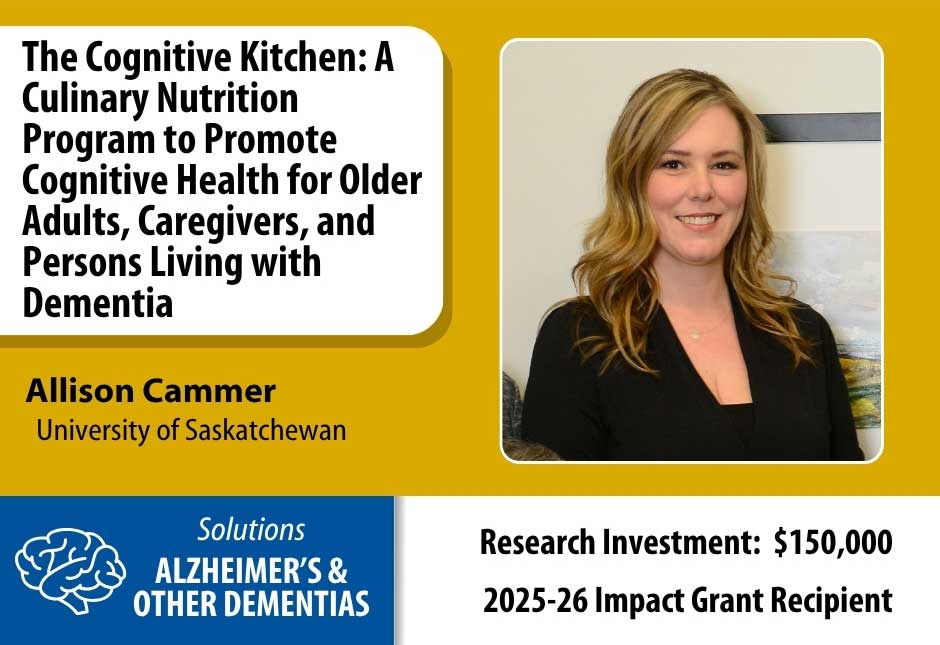
Led by Allison Cammer (University of Saskatchewan)
Impact Grant: $150,000
Healthy dietary patterns can reduce risk of dementia and promote cognitive health for both persons with dementia and caregivers. As such, we co-developed The Cognitive Kitchen program, a 6-session culinary health program combining education with food preparation to translate dietary patterns into everyday application by older adults, caregivers, and persons with dementia. Initial evaluation of the program has shown it is feasible and acceptable to participants, with strong engagement. Feedback from participants expressed the need for more flexibility about timing and access.
We will adapt the Cognitive Kitchen program for web-based video delivery paired with a regular virtual session to connect with the facilitator and peers. These enhancements will increase flexibility and decrease program costs. Our interdisciplinary research team will evaluate the program impacts on food agency, nutrition behaviour and social support. As the sole culinary education program developed to address dementia risk reduction and living well with dementia, the Cognitive Kitchen is well-positioned to improve outcomes in this space.
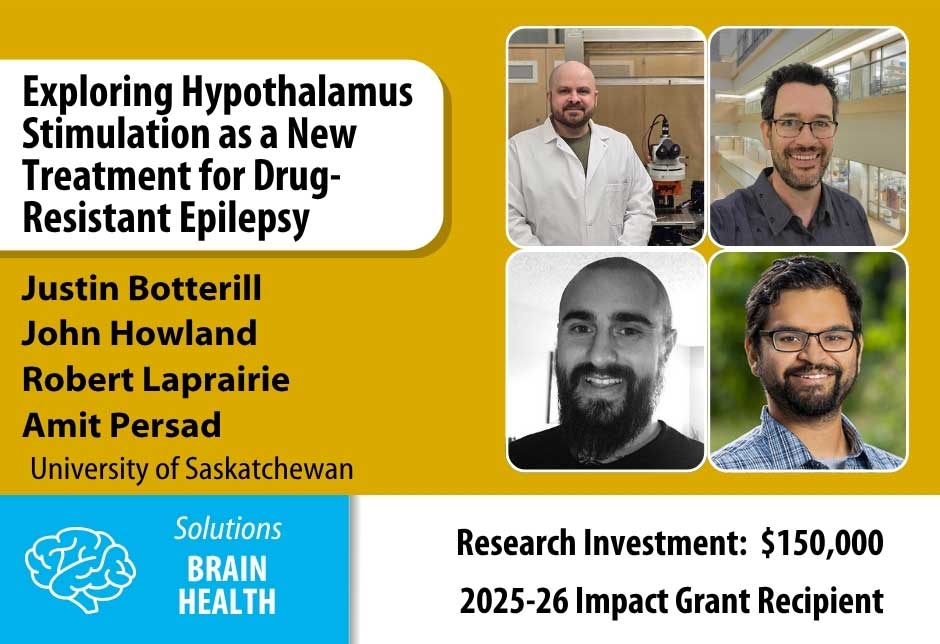
Led by Justin Botterill (University of Saskatchewan), John Howland (University of Saskatchewan), Robert Laprairie (University of Saskatchewan) and Amit Persad (University of Saskatchewan)
Impact Grant: $150,000
Epilepsy is a severe neurological disorder that affects approximately 300,000 Canadians. Anti-seizure medications are the main treatment strategy for patients with epilepsy, but 1 in every 3 patients experience drug-resistant epilepsy. Therefore, a major goal of our research is to identify new and effective treatment strategies for patients with drug-resistant epilepsy.
Preliminary data from our laboratory has found that a brain region known as the hypothalamus influences seizure frequency in mouse models of epilepsy. In the present study, we plan to test whether modifying the activity of the hypothalamus with low frequency stimulation procedures can reduce seizures in mice and human patients with drug-resistant epilepsy. This type of brain stimulation would offer a safe and effective method for reduction of seizure frequency. Our findings could lead to the discovery of new therapies for people living with drug-resistant epilepsy.
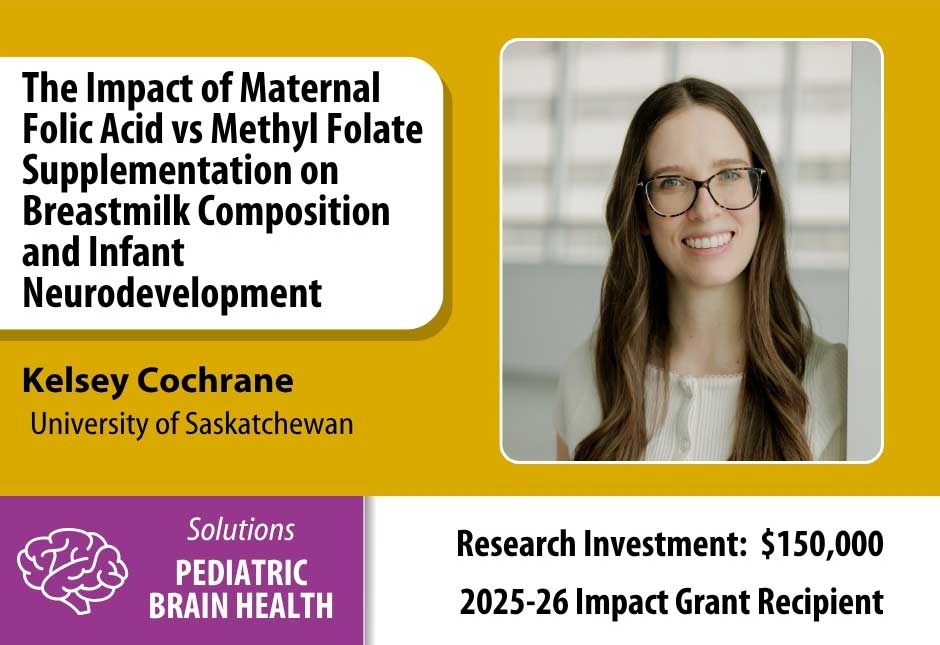
Led by Kelsey Cochrane (University of Saskatchewan)
Impact Grant: $150,000
Folate, a B vitamin, is recommended for daily supplementation in the form of folic acid while breastfeeding to support the baby's neurodevelopment and the mother's health. However, our bodies are only able to process small amounts of folic acid into folate, which could result in some unused folic acid in breast milk, which may actually interfere with folate-related metabolism. “Methyl folate” is a new folate form that is increasingly added to supplements in place of folic acid.
We plan to enroll 200 pregnant people to supplement with folic acid or with methyl folate. At ~6 weeks postpartum, participants will collect breastmilk samples in their own home over 24 hours. We will calculate the total exposure of unused folic acid in breastmilk caused by daily folic acid versus daily methyl folate supplementation and determine whether recommending methyl folate is a way to reduce levels of unused folic acid fed to the infant. The clinical impact of folate supplementation will be evaluated by measuring other milk components known to support brain health and by neurocognitive testing at 6 months postpartum. This will result in targeted recommendations for maternal folate supplementation.
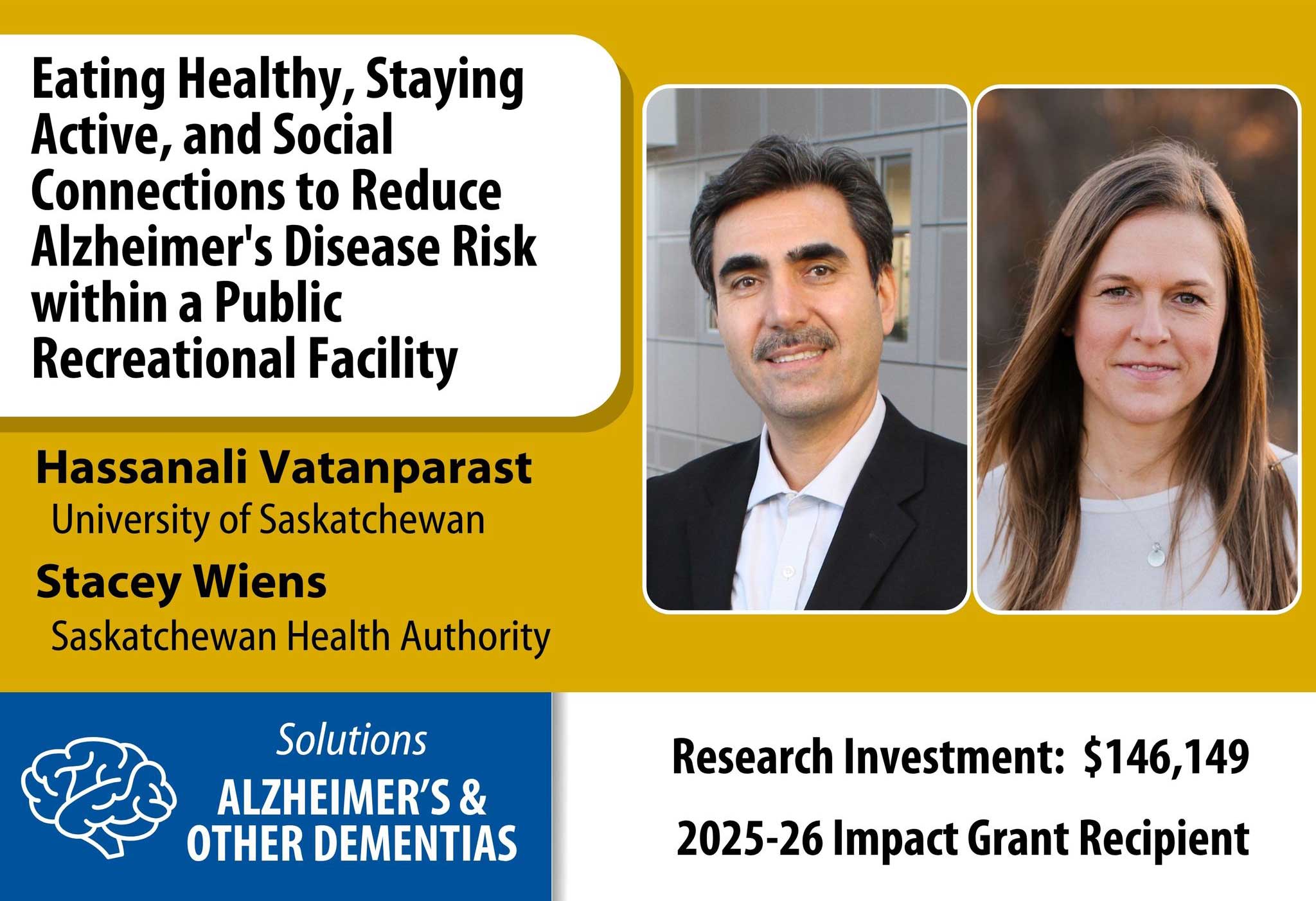
Led by Hassanali Vatanparast (University of Saskatchewan), Stacey Wiens (Saskatchewan Health Authority), Changiz Taghibiglou (University of Saskatchewan), Shelly Howe (City of Moose Jaw, Tim Hanna (Saskatchewan Parks and Recreation Association), Marta Erlandson (University of Saskatchewan), Christine Mills (University of Waterloo), Mojtaba Shafiee (University of Saskatchewan), Monidipa Saha (University of Saskatchewan), Zoe Longworth (University of Saskatchewan) and Asit Sarkar (University of Saskatchewan)
Impact Grant: $146,149
It is well established that combined lifestyle changes involving healthy diet, regular physical activity, and social engagement are among the most effective strategies for delaying cognitive decline and reducing the risk of Alzheimer’s disease. Public recreational facilities are popular and accessible spaces that hold great potential to enhance their health-promoting role. Our pilot intervention will partner with Moose Jaw’s Kinsmen Sportsplex to strengthen existing programs and offerings focused on Alzheimer’s disease risk reduction and awareness. The initiative will engage Sportsplex patrons, their families, and staff in activities that support brain health and foster community connection.
Through this project, we envision the Kinsmen Sportsplex becoming a model ‘Brain Healthy Center,’ providing nutritious food and beverage options, encouraging physical activity combined with mental stimulation, and expanding opportunities for social interaction. All community members aged 50 and older who attend the Sportsplex will be invited to participate. A comprehensive pre-post intervention evaluation will be conducted among frequent patrons to assess outcomes. Our ultimate goal is to create an innovative community-based model that champions brain health and contributes to building a healthier Saskatchewan for everyone.
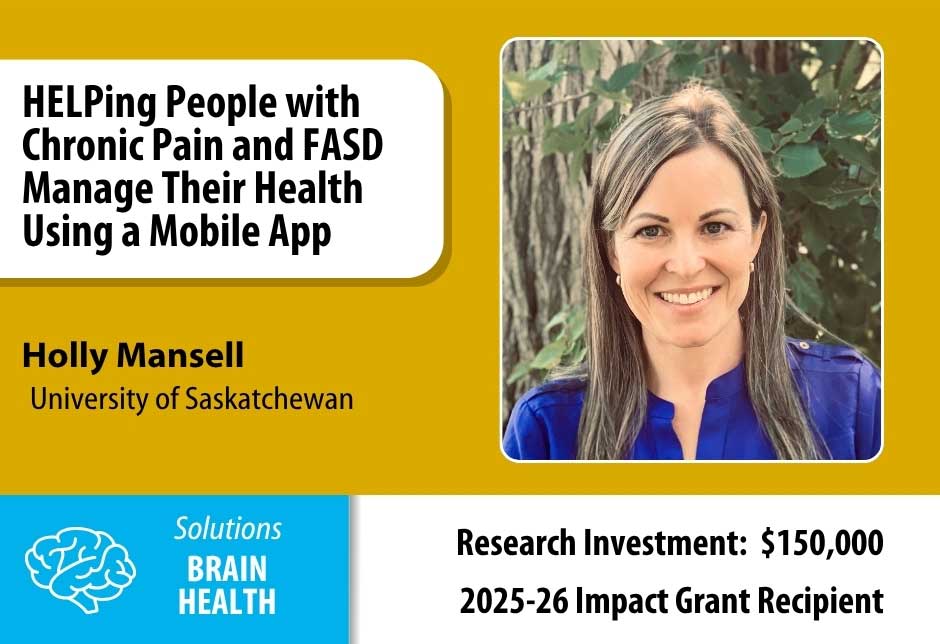
Led by Holly Mansell (University of Saskatchewan)
Impact Grant: $150,000
Managing chronic health conditions like chronic pain and Fetal Alcohol Spectrum Disorder (FASD) can be challenging, especially when support is limited. Tracking symptoms, adhering to treatment plans, and engaging in self-care strategies all play a role in self-management of these chronic conditions. Our team has developed a mobile app called HELP (Health Education and Learning Platform) to support people in managing their health.
Originally designed for transplant patients, HELP offers features like medication reminders, symptom tracking, educational resources, and communication tools to help users stay on top of their care. In this project, we will customize HELP for people living with chronic pain and FASD, working closely with healthcare providers and community organizations in Saskatchewan. We will test how easy and helpful the app is for patients and care teams in real-world settings. Our goal is to create a flexible, user-friendly tool that improves health and well-being by supporting self-management. Our hope is that this app can be further expanded to help people with other health conditions across the province and beyond.